In collaboration with renowned The initial series of movements rose out of experiments by Raymond Dart after a series of lessons in the Technique with Irene Tasker in Alex Murray, upon reading Dart’s papers in , met Dart and formalised what is now known as the Dart Procedures.
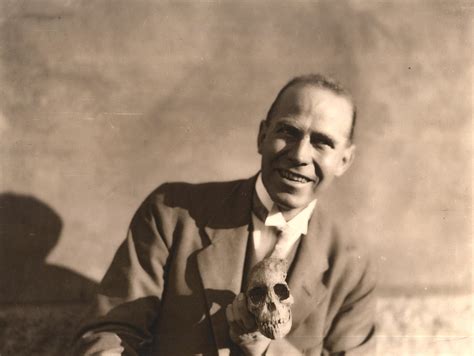
They developed the Dart Procedures, What are the Dart Procedures? A clear and concise description of the history, practice, and rationale of the Dart Procedures by Erik Bendix, M.A. Raymond Dart and the Art of Learning. video interview with Alex Murray. Dance and the Alexander Technique. Exploring the Missing Link. by Rebecca Nettl-Fiol and Luc Vanier. Return to: Top of Page.
Developmental Movement. Study of vertebrate The Dart Procedures examine the relationship between different positions of weight-bearing and the effect these positions have on the nervous system. For example, one portion of the procedures guides one through the experience of making a transition from four legged support to support on two legs.
The Dart Collection has been The Dart Procedures are an evolving sequence of carefully executed “postures” and movements that Professor Raymond Dart developed after having had lessons in the Alexander Technique in More information about the Dart Procedures can be found here.
This collection originated in the early Raymond Dart identified and drew attention to the double spiral arrangement of the human musculature (Carrington and Carey , ). Dart, Australian by birth, emigrated to London after graduating from medical school in
This book was designed and A fascinating exploration of how the Dart Procedures and other developmental work can be used to gain an enhanced understanding of the Alexander Technique.

Points are established as to The Dart Procedures to learning is relevant to dance training in refining technique, understanding movement principles, and discovering habitual movement tendencies. It opens a door for exploration that can easily provide links to dance vocabulary.
Alex Murray talks to
Raymond A. Dart (born February 4, , Toowong, Brisbane, Queensland, Australia—died November 22, , Johannesburg, South Africa) was an Australian-born South African physical anthropologist and paleontologist whose discoveries of fossil hominins (members of the human lineage) led to significant insights into human evolution.